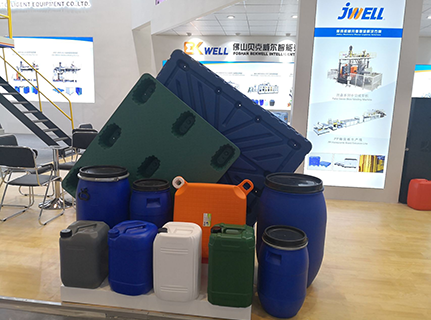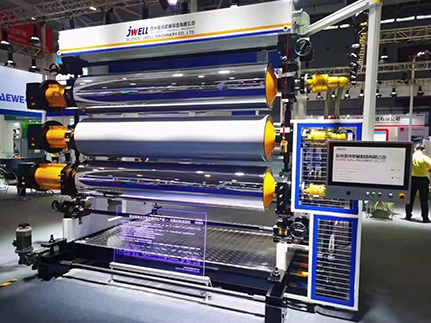
Polymer modification has become an essential part of modern plastics manufacturing. Whether the goal is to improve strength, increase heat resistance, enhance flame retardancy, or create specialty compounds, the quality of the compounding process directly affects the final material performance.
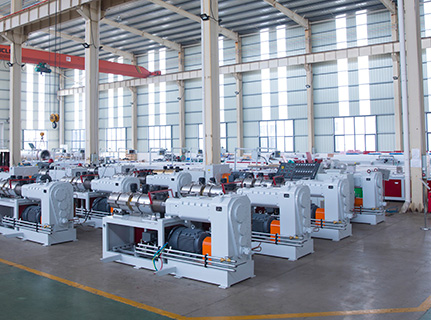
At the center of this process is the compounding extruder, a machine designed to melt, mix, disperse, and homogenize polymers with additives, fillers, fibers, pigments, and other functional materials.
A compounding extruder machine is an industrial system that continuously melts and mixes polymers with additives or reinforcing materials to produce modified plastic compounds with specific physical, thermal, electrical, or aesthetic properties.
One of the most common questions among manufacturers is whether a single screw extruder or a twin screw extruder machine is the better choice for polymer modification. The answer depends on the application, but for most modern compounding tasks, twin screw technology has become the industry standard.
Polymer modification involves changing the properties of a base resin by incorporating additional materials during processing. Common modification objectives include polymer coloring, filler incorporation, fiber reinforcement, impact resistance improvement, dimensional stability enhancement, flame retardancy, and the production of polymer blends. These processes require efficient melting and highly uniform mixing to ensure consistent material performance.
Applications include:
Engineering plastics
Color masterbatch production
High-filler compounds
Glass fiber reinforced plastics
Biodegradable materials such as PLA and PBAT
As formulations become more complex, the limitations of traditional extrusion equipment become more apparent.
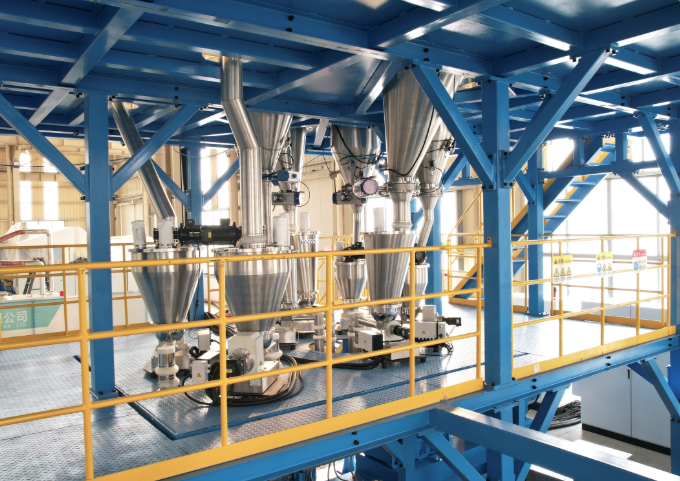
A single screw extruder uses one rotating screw inside a heated barrel to convey, melt, and pressurize polymer material.
The design is relatively simple and remains highly effective for standard extrusion applications such as pipe, sheet, and profile production. Material moves forward through the barrel, gradually melting before exiting through a die.
For straightforward processing tasks involving unfilled or lightly modified materials, a single screw extruder can provide reliable performance and lower equipment costs.
However, when multiple additives, fillers, pigments, or reinforcing fibers must be dispersed evenly, mixing capability becomes a limiting factor.
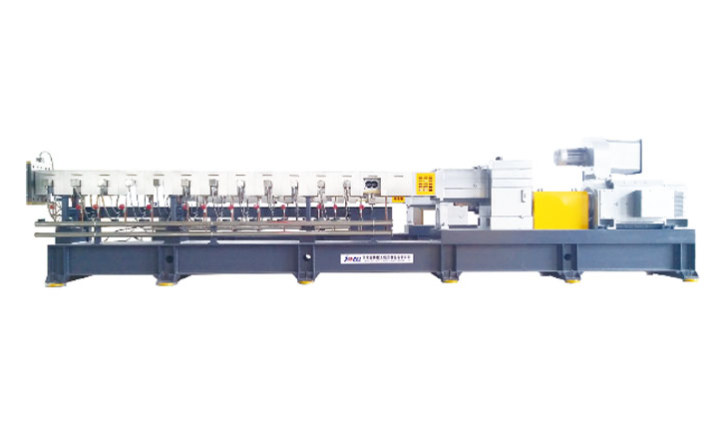
A twin screw extruder machine contains two intermeshing screws operating within the same barrel. Depending on the design, the screws may rotate in the same direction (co-rotating) or opposite directions.
According to JWELL's compounding machine documentation, twin screw systems provide superior mixing performance, improved heat transfer, higher melting capacity, stronger devolatilization capability, and more precise temperature control compared with single screw designs.
The modular screw configuration is one of the most important advantages. Different screw elements can be combined to achieve specific processing goals, such as:
Intensive mixing
Fiber dispersion
Filler incorporation
Reactive extrusion
Degassing and devolatilization
Research on co-rotating twin screw extrusion has shown that kneading element geometry and screw configuration significantly influence mixing efficiency and material homogeneity, making twin screw technology particularly suitable for advanced polymer compounding applications.
The following comparison highlights the major differences between the two technologies.
| Feature | Single Screw Extruder | Twin Screw Compounding Extruder |
|---|---|---|
| Mixing Capability | Moderate | Excellent |
| Filler Loading Capacity | Limited | High |
| Fiber Reinforcement Processing | Limited | Excellent |
| Temperature Control | Good | Superior |
| Devolatilization Performance | Basic | Advanced |
| Material Flexibility | Moderate | Extensive |
| Polymer Modification Applications | Limited | Ideal |
| Automation Integration | Standard | Advanced |
For manufacturers focused on material modification rather than simple shaping, the twin screw configuration generally provides a clear technical advantage.
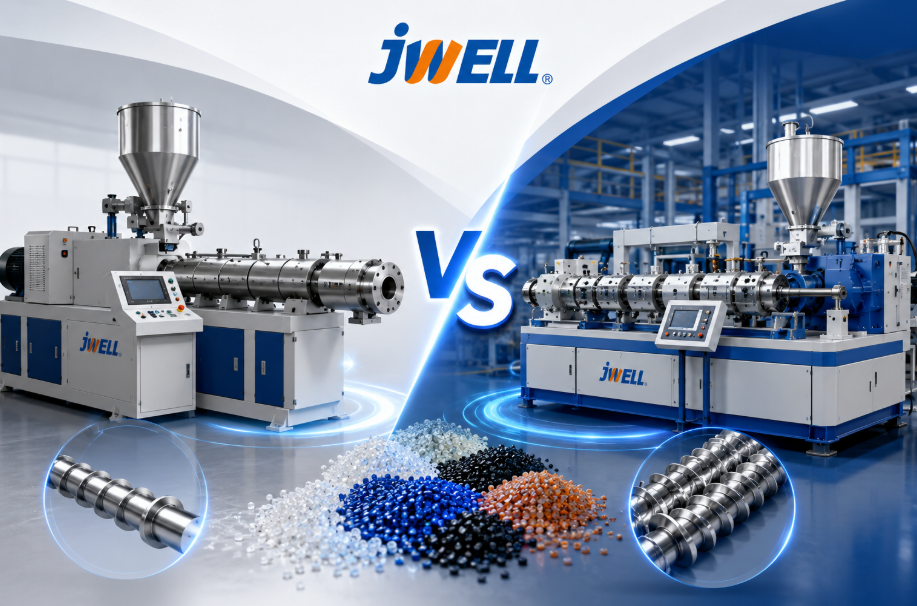
The increasing demand for functional plastics has accelerated the adoption of twin screw systems worldwide.
Modern engineering plastics often require multiple additives to achieve target properties. A material may contain glass fiber reinforcement, flame retardants, impact modifiers, pigments, and processing aids simultaneously. Achieving uniform dispersion of these components requires intensive mixing that a single screw system often cannot provide.
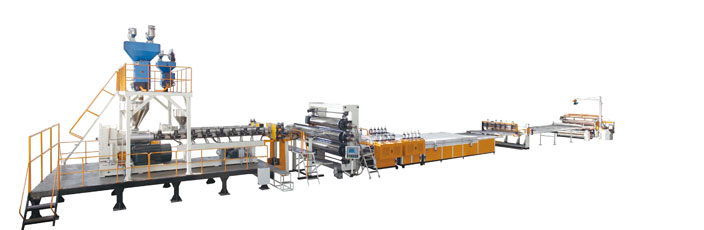
JWELL's compounding equipment is designed for a wide range of applications, including engineering plastics pelletizing, high-filler masterbatch production, PET recycling, biodegradable plastic compounding, TPU/PU reaction extrusion, and polymer modification.
In these applications, consistent material quality depends heavily on the machine's ability to maintain stable temperature profiles, controlled shear, and homogeneous mixing.
Not every production process requires a twin screw machine. However, several applications benefit significantly from its enhanced mixing capability.
Engineering plastics are among the most demanding examples. According to JWELL, engineering plastic modification often requires precise metering systems, high torque transmission, wear-resistant screw elements, and advanced automation to maintain consistent quality.
Color masterbatch production is another area where mixing performance directly affects product quality. Uniform pigment distribution is essential for achieving consistent color appearance in downstream products.
High-filler compounds also depend on strong mixing performance. Inorganic fillers such as calcium carbonate, talc, and kaolin must be dispersed evenly throughout the polymer matrix to improve performance while controlling material costs. JWELL's high-filler pelletizing systems are specifically designed for these applications.
The growth of biodegradable plastics further increases demand for advanced compounding equipment. Materials such as PLA and PBAT often require precise formulation control to balance mechanical performance and biodegradability.
For many processors, a single screw extruder remains sufficient for conventional extrusion operations. However, an upgrade should be considered when product requirements become more complex.
Common indicators include inconsistent additive dispersion, poor filler distribution, increasing quality variation, limited formulation flexibility, or growing demand for specialty compounds.
As product portfolios expand into engineering plastics, masterbatch production, recycled materials, or biodegradable compounds, the benefits of twin screw technology often outweigh the higher initial investment.
Choosing the right equipment also involves evaluating the capabilities of the supplier. Working with an experienced extruder machine manufacturer can help ensure that screw configuration, torque capacity, feeding systems, and downstream equipment are properly matched to the intended application.
For example, the jwell company offers multiple compounding solutions ranging from standard torque systems to high-torque CJWS series extruders designed for demanding modification and pelletizing applications.
While single screw extruders remain effective for many standard extrusion processes, polymer modification increasingly requires the advanced mixing, temperature control, and process flexibility offered by a compounding extruder. For applications involving engineering plastics, masterbatches, high filler loading, fiber reinforcement, or biodegradable materials, a twin screw extruder machine generally delivers superior performance and more consistent compound quality. As formulations become more sophisticated, twin screw technology continues to set the benchmark for modern polymer compounding.
A compounding extruder is used to mix polymers with additives, fillers, pigments, fibers, and modifiers to create materials with specific properties.
Twin screw systems provide superior mixing, better temperature control, stronger devolatilization, and higher flexibility for complex formulations.
Yes, but its mixing capability is limited compared with a twin screw system, making it less suitable for demanding modification applications.
Common materials include PE, PP, ABS, PA, PC, PET, PLA, elastomers, engineering plastics, and various modified polymer compounds.
Yes. Twin screw compounding systems are widely used for PLA, PBAT, PBS, PHA, and other biodegradable plastic formulations.
Wikipedia – Extrusion
https://en.wikipedia.org/wiki/Extrusion
Wikipedia – Polymer Engineering
https://en.wikipedia.org/wiki/Polymer_engineering
Encyclopaedia Britannica – Plastics Processing
https://www.britannica.com/technology/plastic
arXiv – Melt-Mixing by Novel Pitched-Tip Kneading Disks in a Co-Rotating Twin-Screw Extruder
https://arxiv.org/abs/1004.2273
 English
 한국어
한국어 français
 Español
 русский
 português
 العربية
 tiếng việt
 Türkçe
 ไทย
ไทย Polska