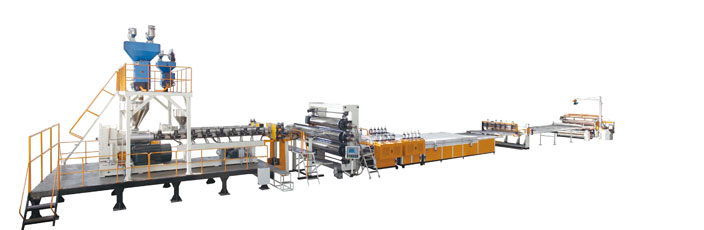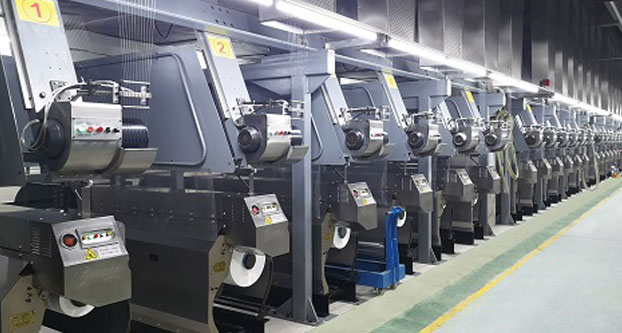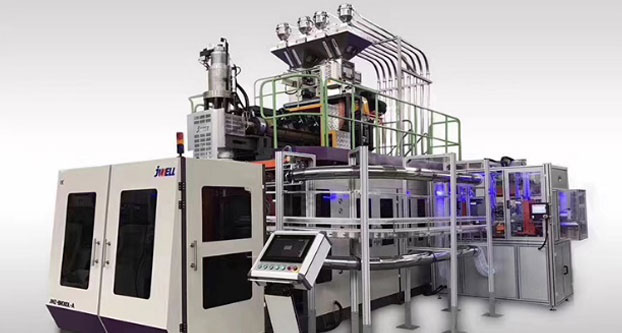
Engineering plastic compounding refers to the technology of optimizing the performance of engineering plastics (such as PA, PC, PBT, PPO, PPS, etc.) to meet specific application requirements through physical, chemical or a combination of both methods. The core goal of modification is to improve the mechanical strength, heat resistance, chemical resistance, flame retardancy, wear resistance, etc. of the material, or to reduce costs and improve processing performance. It is mainly used in the automotive industry, electrical and electronic industry, machinery industry, aerospace, medical equipment, energy and environmental protection, etc.
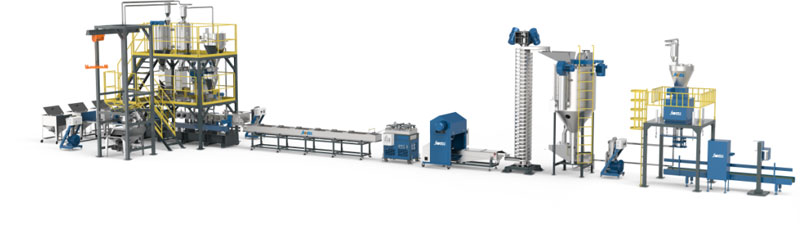
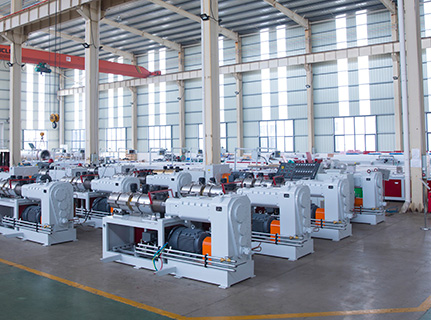
Model:CJWS75
Power:450KW (AC frequency motor), maximum screw speed 900RPM, energy-saving and efficient.
Output:1T-2T/h
Loss-in-weight :Automatic metering and feeding of multiple materials with high precision to ensure formula accuracy.
High-precision metering:Automatic material measurement to ensure the stability of product quality.
Durable barrel:The barrel adopts tungsten carbide alloy liners to extend the service life of the barrel and reduce maintenance costs.
High-performance Screw Elements:made of PM, with high wear resistance and strength to ensure long-term stable operation.
Glass fiber reinforced side feeder:The side feeding design allows the glass fiber to enter the main material flow in sections and in a controllable manner from the side, avoiding fiber concentration and agglomeration, improving the dispersion uniformity in the matrix material, reducing fiber damage, and achieving high vacuum exhaust effect, thereby improving the density of the final product. Low shear feeding can better maintain the fiber length (especially long fiber reinforcement, such as 6~25mm), and the buffer hopper is stirred to prevent the material from bridging in the hopper, thereby improving the feeding efficiency.
Automated production:Equipped with small bag and ton bag feeding stations, quick-opening strand die head, cooling water tank, Air knife,Gantry pelletizer,Lifting conveyor, Finished product homogenization silo and Bagging system to improve production efficiency.
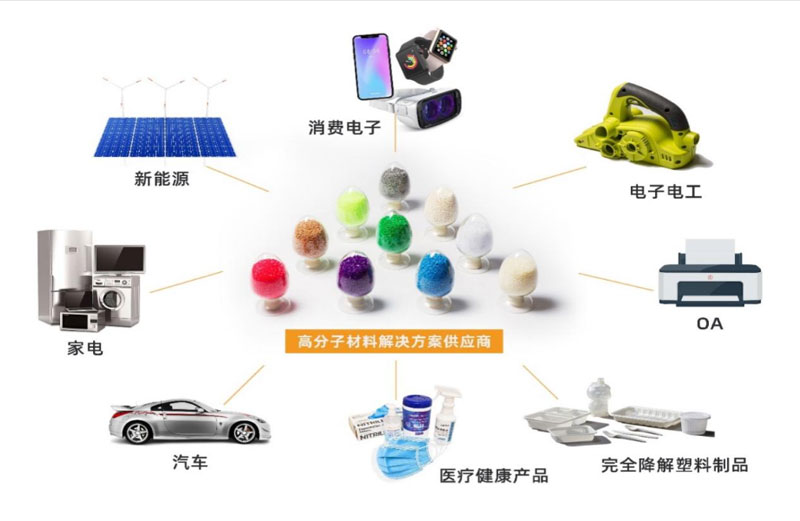
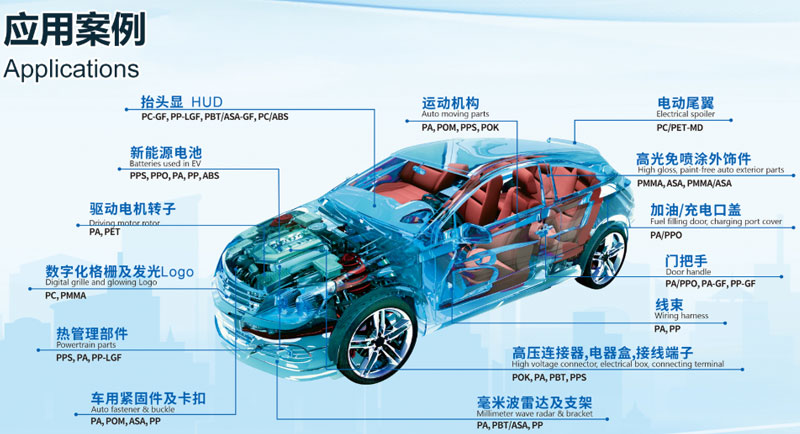
Automotive industry:
Lightweight and energy saving: Engineering plastics can reduce the weight of the vehicle body and reduce fuel consumption.
Nylon (PA): used to manufacture fuel lines, intake manifolds, gears, etc.
Polycarbonate (PC): headlight covers, instrument panels, window glass (high light transmittance, impact resistance).
Polyoxymethylene (POM): door locks, seat belt components (wear-resistant, low friction).
Polyphenylene sulfide (PPS): high-temperature resistant sensor housing, ignition components
Electrical and electronic industry
Insulation and precision components: high temperature resistance, flame retardancy, and dimensional stability.
Polybutylene terephthalate (PBT): connectors, relay housings.
Liquid crystal polymer (LCP): miniaturized electronic components (such as mobile phone antennas, high-frequency connectors).
Polyimide (PI): flexible circuit boards, high-temperature insulation films.
Polyetheretherketone (PEEK): chip carriers, corrosion-resistant cable sheaths.
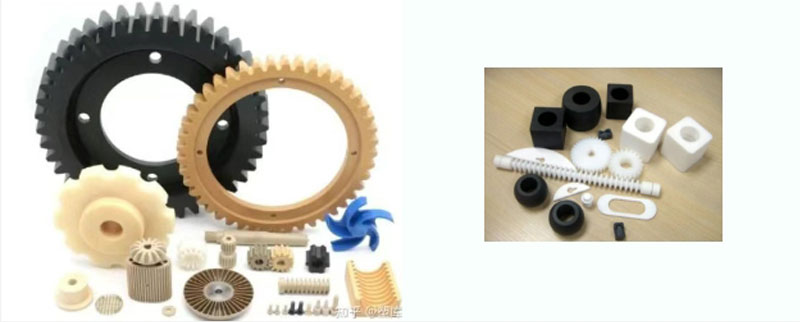
Mechanical industry
Wear-resistant and high-strength parts:
Polyoxymethylene (POM): gears, bearings, sliders (self-lubricating, low wear).
Polyetheretherketone (PEEK): chemical pumps and valves, seals (corrosion-resistant, high-pressure resistant).
Ultra-high molecular weight polyethylene (UHMWPE): conveyor belts, guide rails (wear-resistant, impact-resistant).
Aerospace
Adaptability to extreme environments:
Polyphenylene sulfide (PPS): aircraft interiors (flame retardant, low smoke).
Polyetherimide (PEI): cabin panels, radomes (high strength, radiation-resistant).
Polytetrafluoroethylene (PTFE): hydraulic system seals (low temperature resistant, corrosion resistant).
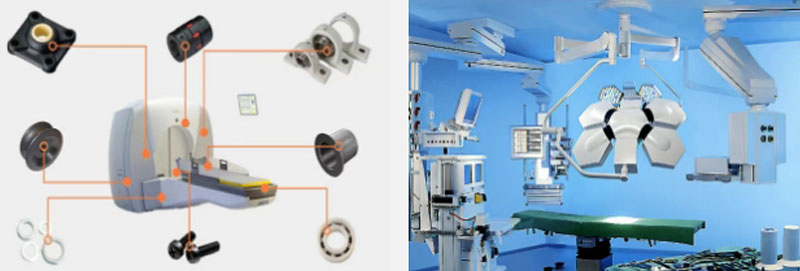
Medical devices
Biocompatibility and sterilization:
Polyetheretherketone (PEEK): orthopedic implants, dental instruments (metal alternative).
Polytetrafluoroethylene (PTFE): artificial blood vessels, catheters (anticoagulation).
Polymethyl methacrylate (PMMA): artificial lenses, bone cement.
Energy and environmental protection
Corrosion resistance and weather resistance:
Polyaniline (PANI): conductive material for solar cells.
Polyvinylidene fluoride (PVDF): lithium battery diaphragm, sewage treatment filter membrane.
Polypropylene (PP): fuel cell bipolar plate (lightweight, acid-resistant).
Emerging application areas
3D printing: PEEK, PA, etc. are used for customized complex structural parts.
5G communication: LCP materials are used for antennas with high frequency and high speed transmission.
Degradable engineering plastics: such as high-performance applications after modification of polylactic acid (PLA).
The advantages and the after-sales service
JWELL provides a full range of after-sales services , including equipment installation, commissioning, operator training, fault repair and other services. We have professional mechanical, electrical, after-sales and other technical teams to ensure the normal operation of the equipment, promptly solve the problems and doubts encountered by customers in the production process, and provide strong technical support for customers' production. At the same time, we also provide non-standard customized services according to the needs of different customers to meet the increasingly stringent new process control requirements.
 English
 한국어
한국어 français
 Español
 русский
 português
 العربية
 tiếng việt
 Türkçe
 ไทย
ไทย Polska