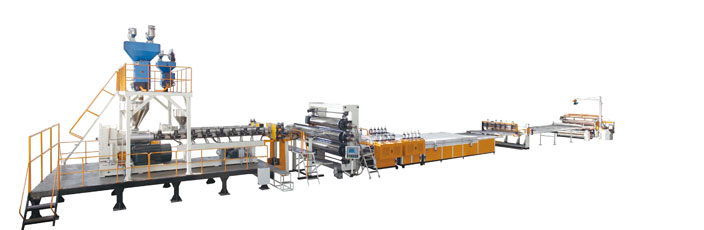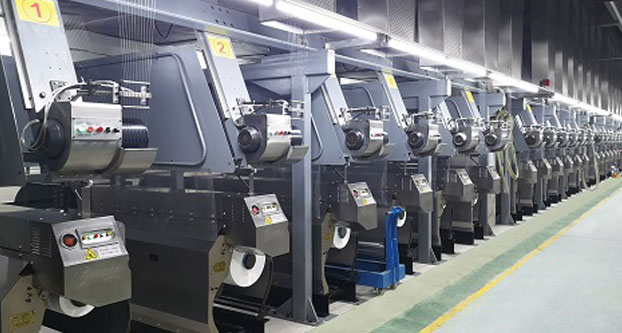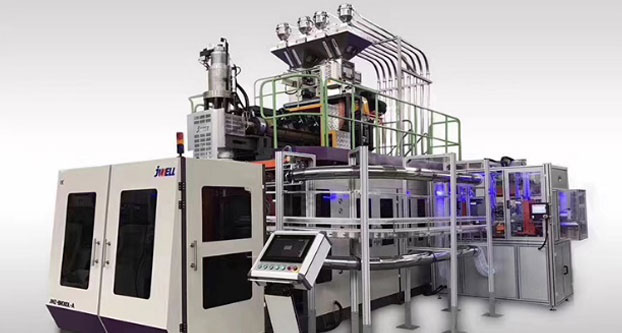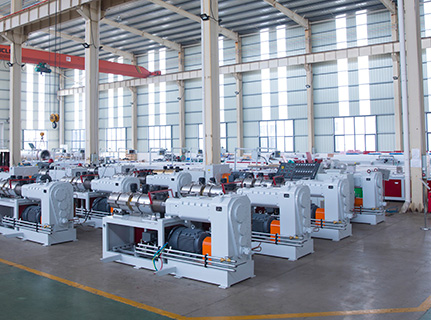
As global demand for reliable water, gas, and irrigation infrastructure continues to grow, manufacturers are investing in more efficient pipe production technologies. Among these technologies, the pipe extruder machine remains the foundation of modern plastic pipe manufacturing, enabling continuous production with high dimensional accuracy and stable output.
A pipe extruder machine is an industrial system that melts thermoplastic materials such as HDPE and continuously forms them into pipes through extrusion, calibration, cooling, and cutting processes.
For companies planning to enter or expand pipe manufacturing, choosing the right HDPE pipe extruder is a critical decision. Production capacity, energy efficiency, automation level, and pipe specifications all influence long-term profitability. This guide explains the key factors buyers should evaluate before selecting an extrusion pipe machine and how modern production lines are evolving to meet industry demands.
HDPE (High-Density Polyethylene) has become one of the most widely used materials for pipe manufacturing because of its combination of strength, flexibility, and corrosion resistance.
According to the Wikipedia entry on High-Density Polyethylene, HDPE is widely used in piping systems due to its high strength-to-density ratio and excellent resistance to chemicals and environmental stress. These properties make it suitable for potable water systems, gas distribution networks, industrial pipelines, and agricultural irrigation applications.
In many infrastructure projects, HDPE pipes have gradually replaced traditional metal piping because they are lighter, easier to install, and less susceptible to corrosion-related failures.
The working principle of an HDPE pipe extruder is based on continuous plastic extrusion.
HDPE resin pellets are fed into the extruder, where a rotating screw conveys, compresses, and melts the material. The molten polymer is then forced through a specially designed die that forms the pipe shape. After exiting the die, the pipe enters a vacuum calibration and cooling system, which ensures dimensional accuracy before the pipe is pulled, cut, or coiled for storage.
This continuous manufacturing process allows producers to achieve consistent quality while maintaining high production efficiency.
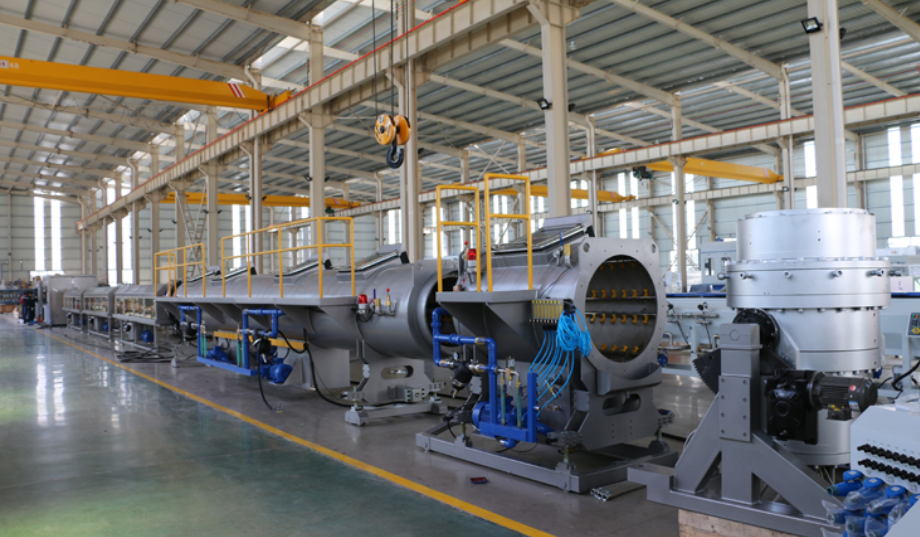
Not all extrusion systems deliver the same performance. A high-quality pipe extruder machine should balance productivity, energy consumption, automation, and long-term reliability.
One of the most important factors is extrusion efficiency. An optimized screw design improves material plasticization and output consistency while reducing energy consumption. Modern control systems also play a major role by monitoring temperatures, line speed, and process stability in real time.
For manufacturers operating in competitive markets, production stability often has a greater impact on profitability than maximum output capacity alone.
According to JWELL's official product information, its HDPE pipe extrusion machine production line adopts advanced European technology and is specifically designed for high-speed extrusion of HDPE, PP, and other polyolefin materials.
Compared with conventional production lines, JWELL states that the system can achieve:
Up to 35% energy savings
More than double production efficiency
Reduced labor requirements
These improvements can significantly lower operating costs, especially for manufacturers running production lines continuously.
The production line also features a high level of automation, helping maintain stable operation while reducing dependence on manual adjustments.
Different projects require different pipe sizes and production capacities. Rather than focusing solely on machine models, buyers should first determine their target application.
| Project Type | Recommended Diameter Range | Suggested Line Category |
|---|---|---|
| Cable Protection Pipes | Ø8–Ø63 mm | Small-Diameter Line |
| Agricultural Irrigation | Ø110–Ø250 mm | Medium-Diameter Line |
| Municipal Water Supply | Ø315–Ø630 mm | Medium-to-Large Line |
| Gas Distribution Networks | Ø400–Ø1200 mm | Large-Diameter Line |
| Long-Distance Transmission Projects | Ø1400 mm+ | Ultra-Large Diameter Line |
Source: JWELL HDPE Pipe Extrusion Line technical specifications.
Selecting equipment based on actual project requirements helps avoid both underinvestment and unnecessary capital expenditure.
Automation has become a major competitive advantage in modern pipe manufacturing.
JWELL's production lines incorporate SIEMENS computer control technology, enabling integrated monitoring and closed-loop control throughout the entire extrusion process. According to the company, this system supports energy consumption analysis, equipment maintenance reminders, production data management, and remote diagnostics.
These functions help manufacturers improve process consistency while reducing downtime and maintenance costs.
As Industry 4.0 technologies continue to expand across manufacturing sectors, intelligent monitoring systems are becoming increasingly important for large-scale extrusion operations.
Before investing in an extrusion pipe machine, buyers should carefully evaluate several practical considerations.
First, determine the diameter range and pipe specifications required for current and future projects. Many manufacturers initially purchase equipment based on immediate needs, only to discover later that they lack the flexibility to expand production.
Second, evaluate the total cost of ownership rather than focusing solely on purchase price. Energy consumption, maintenance requirements, spare parts availability, and operational efficiency all affect long-term profitability.
Finally, assess the supplier's technical support capabilities. Installation guidance, training, troubleshooting assistance, and after-sales service can significantly impact equipment performance throughout its lifecycle.
The versatility of the HDPE pipe extruder is one of the reasons it remains a preferred solution worldwide.
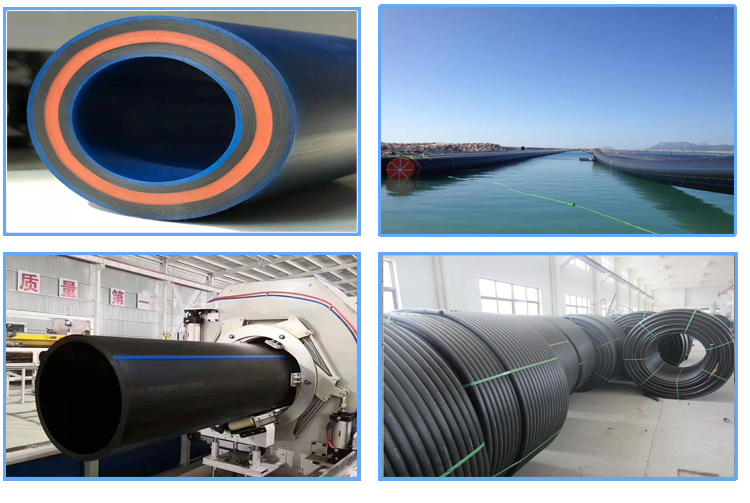
According to JWELL's application information, HDPE pipes produced through extrusion technology are commonly used in:
Urban water supply systems
Urban gas distribution networks
Agricultural irrigation projects
Building water supply and drainage systems
Underground utility infrastructure
Electrical and telecommunications protection systems
Because HDPE combines durability with flexibility, it is suitable for both traditional trench installations and many trenchless construction methods.
The pipe manufacturing industry continues to evolve toward greater efficiency and digitalization. Manufacturers increasingly prioritize:
Higher automation levels
Reduced energy consumption
Improved process monitoring
Better production consistency
As infrastructure investment grows worldwide, extrusion line manufacturers are focusing on technologies that improve productivity while lowering operational costs.
The ability to monitor production data in real time and optimize machine performance is expected to become a standard requirement rather than a premium feature.
Choosing the right pipe extruder machine involves much more than comparing output capacities. Manufacturers should evaluate production goals, energy efficiency, automation capabilities, and future expansion requirements before making an investment. Modern HDPE pipe extruder systems offer significant advantages in productivity, process stability, and operating costs, making them a critical part of today's infrastructure manufacturing industry. By selecting equipment that aligns with actual application needs, businesses can improve both production performance and long-term profitability.
A pipe extruder machine is used to manufacture continuous plastic pipes by melting thermoplastic materials and forming them through an extrusion die, followed by calibration, cooling, and cutting processes.
HDPE offers excellent corrosion resistance, flexibility, impact strength, and long service life, making it suitable for water supply, gas distribution, and industrial applications.
The most important factors include required pipe diameter range, production capacity, energy efficiency, automation level, and long-term maintenance requirements.
Yes. Modern production lines can typically be configured to produce different pipe diameters, wall thicknesses, and material formulations based on project requirements.
HDPE pipes are widely used in municipal water systems, gas distribution networks, agricultural irrigation projects, building infrastructure, and telecommunications protection systems.
Wikipedia – High-Density Polyethylene (HDPE)
https://en.wikipedia.org/wiki/High-density_polyethylene
Wikipedia – Plastics Extrusion
https://en.wikipedia.org/wiki/Plastics_extrusion
U.S. Environmental Protection Agency (EPA) – Sustainable Materials Management
https://www.epa.gov/smm
 English
 한국어
한국어 français
 Español
 русский
 português
 العربية
 tiếng việt
 Türkçe
 ไทย
ไทย Polska