 English
 한국어
한국어 français
 Español
 русский
 português
 العربية
 tiếng việt
 Türkçe
 ไทย
ไทย Polska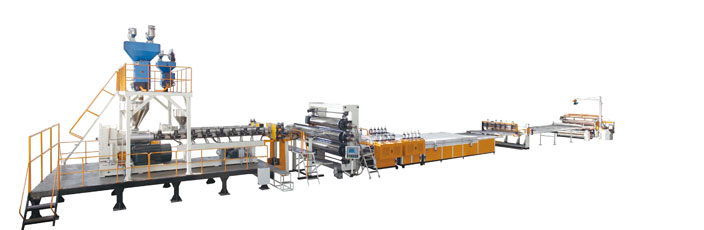
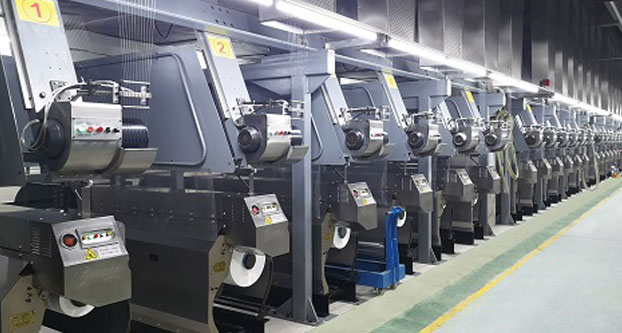
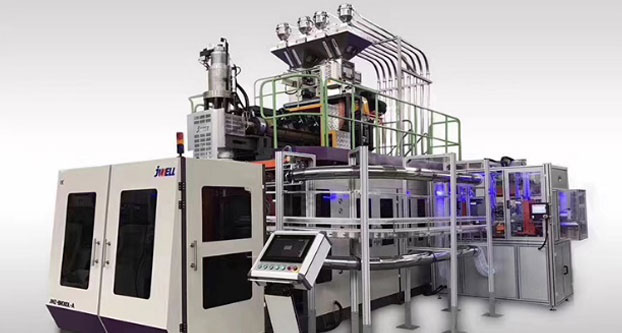
PET sheet manufacturers generally choose between two processing routes: a conventional single-screw line with external crystallizing and drying, or a twin-screw line designed to remove moisture and volatiles during extrusion. Both approaches can produce packaging-grade sheet, but they differ in material preparation, process control, equipment layout and operating priorities.
PET sheet extrusion is a continuous manufacturing process that melts polyethylene terephthalate, forms it through a flat die, and cools it into a sheet with controlled width, thickness and surface quality.
The word “drying-free” can be misleading when taken too literally. It normally means that a separate crystallizing and dehumidifying-drying stage may be removed from the production flow. It does not mean that moisture, contamination or material condition no longer matter. Stable feeding, effective vacuum degassing, suitable screw configuration and controlled melt residence remain essential.
Why Moisture Control Matters in PET Sheet Extrusion
PET is sensitive to moisture during melt processing. When absorbed water remains in the material at extrusion temperature, it can promote hydrolytic chain scission. This reduces molecular weight and may affect melt strength, impact performance, sheet toughness and downstream thermoforming behavior.
A conventional line controls this risk before extrusion. The PET material is crystallized where necessary and dried with low-moisture air before entering the single-screw extruder. A drying-free twin-screw line takes a different approach: moisture and other volatile substances are removed from the material inside the extruder through staged melting, surface renewal and vacuum venting.
Neither route should be judged only by whether an external dryer is present. The real question is whether the complete process can preserve material quality while maintaining stable output and consistent sheet properties.
How a Conventional Single-Screw PET Sheet Line Works
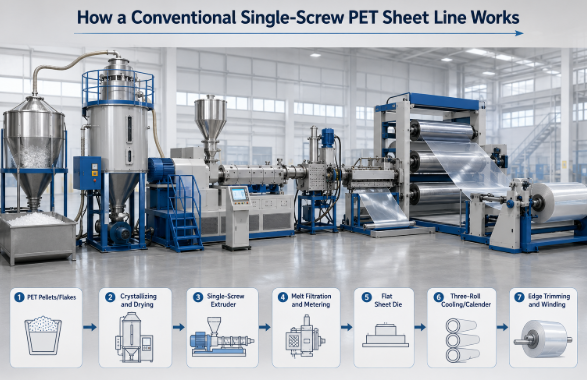
In a conventional setup, PET pellets or flakes pass through material preparation before extrusion. Depending on the feedstock, this may include sorting, crystallizing, drying, blending and metal removal. The prepared material is then fed into a single-screw extruder, where it is conveyed, compressed and melted.
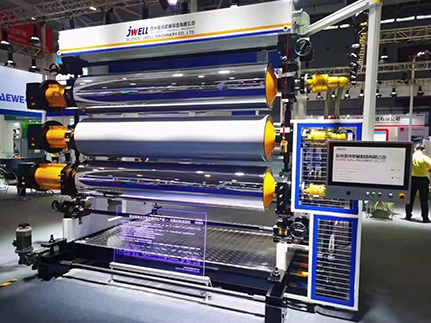
The melt normally passes through a screen changer and a melt pump before entering the flat die. After leaving the die, the sheet is cooled and calibrated by a roller stack, followed by edge trimming, thickness measurement, surface treatment and winding or cutting.
The single-screw route is familiar to many processors. Its operating logic is relatively direct, and the drying stage separates moisture control from melting. This can make troubleshooting easier because the plant can independently check dryer performance, material moisture, extrusion stability and downstream sheet formation.
Its main drawback is the additional material-preparation system. Crystallizers, dryers, conveying pipes and storage equipment require floor space, controls, maintenance and energy. Material may also spend more time in preparation before it reaches the extruder.
How a Drying-Free Twin-Screw PET Sheet Line Works
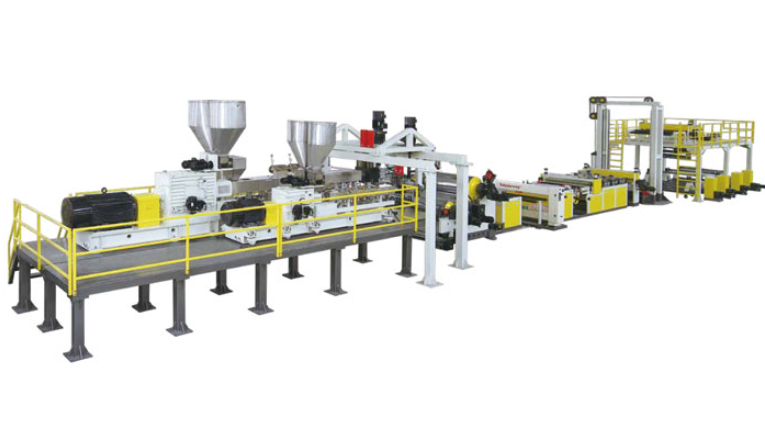
A drying-free twin-screw line typically feeds PET directly into a co-rotating twin-screw extruder configured for melting, mixing and devolatilization. As the screws convey the material, the screw elements repeatedly divide, stretch and renew the polymer surface. Vacuum zones then remove moisture and other volatile components from the melt.
The process depends on more than installing a vacuum pump. Screw geometry, feed stability, vent design, vacuum capacity, melt temperature and residence time must work together. If a vent floods with melt or the vacuum system is poorly maintained, moisture removal may become inconsistent.
A properly configured PET sheet extrusion line can combine direct material feeding, twin-screw plasticizing, vacuum degassing, melt filtration, flat-die forming and roller cooling in one continuous production arrangement.
This route can simplify the upstream equipment layout and may suit operations using different combinations of virgin resin, production scrap or prepared recycled PET. However, feedstock still needs to be clean and controlled. A drying-free process cannot compensate for excessive foreign material, incompatible polymers or unstable flake size.
Drying-Free Twin-Screw vs Single-Screw PET Sheet Lines
| Comparison Factor | Conventional Single-Screw Line | Drying-Free Twin-Screw Line |
| Moisture-control method | Material is dried before extrusion | Moisture is removed through in-barrel vacuum degassing |
| Upstream equipment | Usually requires crystallizing, drying and material conveying systems | May eliminate separate crystallizing and drying equipment |
| Extruder design | Single screw focused on conveying and stable melting | Twin screws provide intensive mixing and repeated surface renewal |
| Feedstock flexibility | Works well with consistently prepared resin | Can offer more flexibility for controlled blends and prepared recycled feedstock |
| Process monitoring | Drying and extrusion can be monitored as separate stages | Feeding, melting, vacuum and extrusion must be coordinated closely |
| Plant layout | Needs more upstream preparation space | Can provide a more compact material-to-sheet process flow |
| Maintenance focus | Dryer filters, desiccant, heaters and conveying system | Screw elements, vents, vacuum lines, condensate traps and seals |
| Best-fit production | Stable recipes with established drying procedures | Integrated production where devolatilization and feedstock flexibility are priorities |
Which Process Produces Better PET Sheet?
Neither screw arrangement guarantees better sheet by itself. Finished quality depends on the complete process, including resin condition, melt filtration, metering accuracy, die design, roller temperature, cooling uniformity and thickness control.
A well-operated single-screw line can produce clear and consistent sheet when the material is dried correctly and extrusion conditions remain stable. A well-designed twin-screw line can also produce high-quality sheet when vacuum devolatilization is effective and shear history is controlled.
Buyers should therefore evaluate the following results rather than relying on the equipment label:
Sheet clarity and color consistency;
Intrinsic-viscosity retention where relevant;
Thickness variation across the sheet;
Surface defects, gels and contamination;
Edge-trim and start-up scrap;
Thermoforming performance;
Stability during long production runs.
A production trial using the intended raw material is more informative than a general claim that one extruder type is always superior.
Energy Use and Production Layout
The conventional route uses energy in both material preparation and extrusion. The dryer must heat and circulate conditioned air, while the crystallizer prevents PET particles from sticking during preparation. The twin-screw route may remove these separate stages, but it requires vacuum equipment and a more complex extrusion system.
For this reason, energy performance should be compared at line level. Ask suppliers to define which systems are included in the calculation, whether the comparison uses the same feedstock, and whether output and finished-sheet quality are equivalent.
The layout of the factory also matters. Removing upstream dryers may reduce equipment footprint and simplify material movement. On the other hand, a plant with existing centralized drying infrastructure may find that a single-screw line integrates more easily with current operations.
Material and Recycling Considerations
Recycled PET introduces more variation than uniform virgin pellets. Flake geometry, bulk density, residual moisture, fines, labels, adhesives and foreign polymers can affect feeding and extrusion. Twin-screw processing can improve mixing and devolatilization, but it does not replace proper sorting, washing and material inspection.
When recycled content is part of the project, the processor should provide representative feedstock samples during line testing. The supplier should explain the filtration arrangement, screen-change method, vacuum configuration and expected response to variations in bulk density.
Processors comparing broader sheet extrusion equipment should also consider whether the line may later produce PETG, PLA or multilayer structures. Future material plans may influence the number of extruders, feeding design, co-extrusion arrangement and die configuration.
How to Choose Between the Two Lines
A conventional single-screw line may be appropriate when the factory already has reliable drying equipment, uses stable resin grades and prefers a familiar process with clearly separated preparation and extrusion stages.
A drying-free twin-screw line may be a better fit when the goal is to simplify upstream preparation, process controlled recycled material, integrate devolatilization or reduce dependence on a separate crystallizing-and-drying system.
Before making the decision, compare:
Virgin, recycled and regrind material ratios;
Required sheet width, thickness and layer structure;
Target output and expected product changes;
Available floor space and existing utilities;
Vacuum-system and dryer maintenance capabilities;
Operator experience and process-control requirements;
Sheet-quality acceptance criteria;
Start-up, installation and training scope.
The most useful quotation is based on real feedstock, finished-sheet specifications and a defined acceptance test. Buyers can review production-line options from jwell and contact us with details of the intended material, sheet size, layer structure and application.
Summary
Single-screw PET sheet lines manage moisture before extrusion, while drying-free twin-screw lines remove moisture through in-process vacuum devolatilization. The right choice depends on feedstock, existing plant equipment, recycling plans, maintenance capability and required sheet quality. Compare the complete production system and validate performance with representative material before selecting a line.
Frequently Asked Questions
Does drying-free PET extrusion mean moisture does not matter?
No. It means moisture is removed during extrusion rather than in a separate dryer. Vacuum performance and process control remain essential.
Can a twin-screw PET line process recycled flakes?
It can process suitably prepared recycled material, but the flakes still need effective sorting, washing and contamination control.
Is a single-screw PET line outdated?
No. It remains a practical option for factories with reliable drying systems, stable feedstock and established operating procedures.
Which line requires more maintenance?
The maintenance focus differs. Single-screw systems require dryer and conveying maintenance, while twin-screw systems require close attention to vents, vacuum equipment and screw elements.
Which process is more energy efficient?
It depends on the complete line configuration and operating conditions. Compare drying, extrusion, vacuum, cooling and downstream energy under the same output and quality requirements.
What information is needed before requesting a PET sheet line quotation?
Provide the material composition, sheet width, thickness range, layer structure, target output, final application and required level of recycled content.