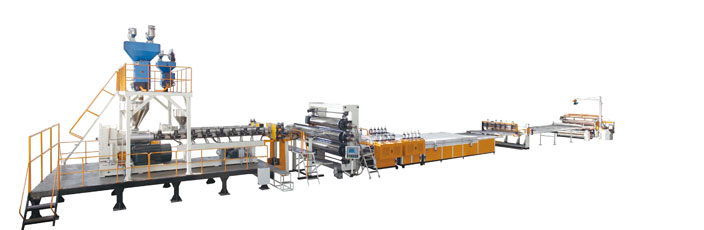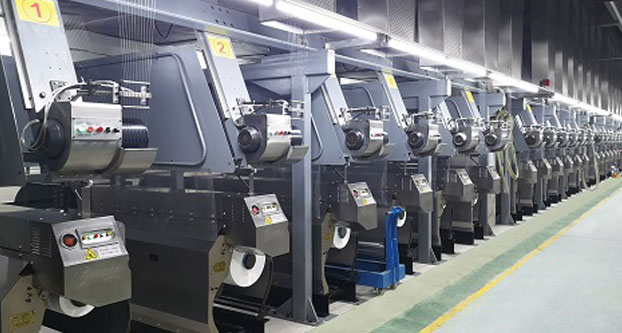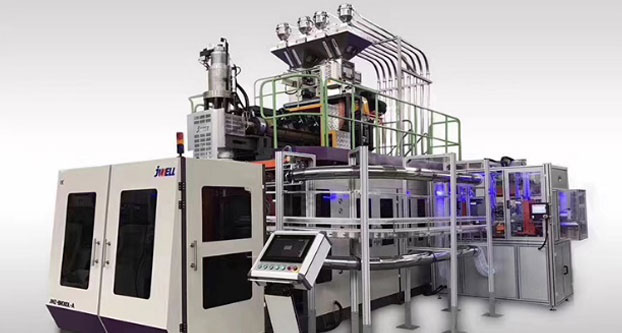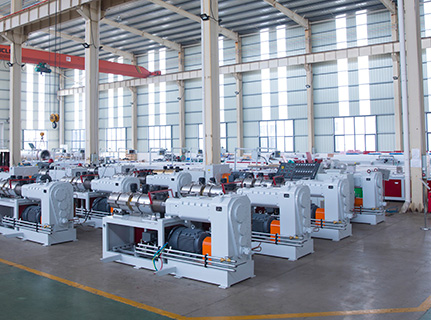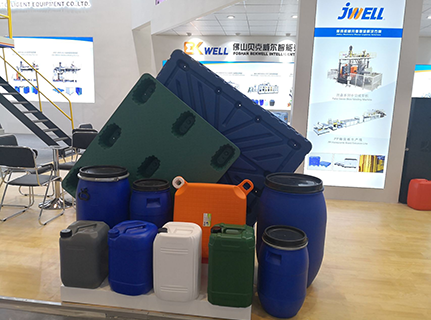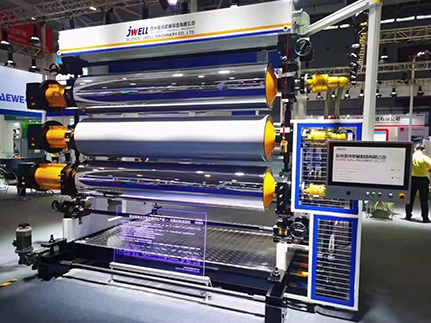
Plastic extrusion is recognized globally as one of the most efficient, scalable, and cost-effective continuous manufacturing processes for thermoplastics. By melting polymer pellets and forcing molten material through precision dies, manufacturers can produce consistent cross-section products including pipes, sheets, films, and customized profiles. Extrusion remains the backbone of high-volume polymer production, balancing stable quality, flexible customization, and low operational costs for modern industrial manufacturing.
As industrial manufacturing moves toward high automation, low energy consumption, and sustainable production, plastic extrusion has become an irreplaceable core process across construction, packaging, automotive, medical, and electrical industries. Unlike intermittent batch processing, extrusion enables 24/7 continuous production, delivering unified dimensional accuracy, stable mechanical performance, and higher production efficiency.
Leading equipment manufacturers continue to upgrade extrusion systems with intelligent control, energy-saving structures, and automated production solutions, helping processing factories reduce costs, improve yield rates, and meet increasingly strict industry compliance and environmental standards.
A plastic extrusion machine is a professional thermoplastic processing device that converts solid plastic pellets into continuous, standardized plastic products. It relies on heating, screw mechanical propulsion, and high-pressure die forming to complete melting, homogenization, shaping, and cooling solidification in one continuous workflow.
Three core functions of extrusion equipment
Solid plastic heating and melting into uniform molten fluid
Precision shaping through customized die structures
Cooling and sizing to form finished profiles, sheets, pipes, and films
The stable operation of an extrusion line depends on the precise coordination of multiple core components, ensuring consistent material flow, stable pressure, and accurate product sizing.
Component | Core Function | Industrial Value |
Hopper | Stable and quantitative raw material feeding | Avoids output fluctuation caused by uneven feeding |
Barrel | Precision heating and material sealing | Controls plastic melting temperature to prevent decomposition |
Extrusion Screw | Conveying, mixing, and pressure building | Determines plasticizing uniformity and production capacity |
Die Head | Shapes molten plastic into target profiles | Defines product geometry and dimensional accuracy |
Cooling System | Rapid cooling and stereotyping | Guarantees product stability and flatness |
Standard industrial extrusion follows a closed-loop continuous process with strict parameter control:
1. Material Feeding
Uniform plastic pellets are fed into the barrel to ensure continuous and stable production.
2. Melting & Plasticizing
Through barrel heating (200–275°C, adaptable to different polymers) and screw friction, solid plastics are fully melted into homogeneous molten state.
3. Mixing & Homogenization
Professional screw design evenly mixes raw materials, colorants, and functional additives to ensure consistent material performance.
4. Filtration & Pressure Stabilization
Breaker plates and screen packs filter impurities and stabilize extrusion pressure to ensure smooth material flow.
5. Die Forming
High-pressure molten plastic passes through precision dies to form continuous product profiles.
6. Cooling & Sizing
Water bath or air cooling systems rapidly solidify products to maintain dimensional stability.
7. Cutting & Winding
Finished products are cut to fixed length or wound into rolls according to application requirements.
High-precision extrusion production relies on scientific parameter calibration:
Temperature (200–275°C): Determines material viscosity and flow uniformity
Screw Speed (0–120rpm): Directly controls production throughput
Extrusion Pressure (Max 34MPa): Ensures dense and uniform product forming
Cooling Rate: Affects product hardness, flatness and internal stress
Different extrusion models are tailored for differentiated industrial demands:
Single-Screw Extruder: Simple structure, stable operation, widely used for pipes, sheets, and common profile production
Twin-Screw Extruder: Excellent mixing and plasticizing performance, suitable for modified materials, compounding, and high-performance plastic products
Co-Extrusion Machine: Realizes multi-layer synchronous forming, used for composite films, barrier packaging, and multi-functional profiles
Extrusion supports 24/7 non-stop industrial operation with stable high throughput. Compared with intermittent processes such as injection molding, it greatly shortens production cycles and improves factory output capacity.
Continuous material flow minimizes raw material waste. Highly automated systems reduce labor dependence, and fixed die molding lowers long-term tooling replacement costs. The unit cost drops significantly with increased production volume, perfectly fitting B2B large-scale manufacturing.
Through customized die design, extrusion can produce various complex cross-section products in one step, including door and window profiles, multi-channel pipes, and precision tubing, eliminating secondary processing and assembly procedures.
Extrusion produces minimal scrap, and waste materials can be recycled and reused, forming a closed-loop production system. It is one of the most eco-friendly plastic processing methods.
Precise control of temperature, pressure, and speed ensures zero batch difference, with uniform product size, smooth surface, and stable mechanical properties, meeting high-tolerance scenarios such as medical and electronic applications.
Compatible with PVC, PE, PP, ABS, PC, TPU, and various modified engineering plastics. Widely applied in construction, packaging, automotive, medical, electrical, agricultural, and consumer goods industries.
Produce PVC/HDPE water supply and sewage pipes, uPVC door and window profiles, insulation boards, and roofing materials. Continuous forming ensures no joints and high overall structural stability, meeting international construction standards.
Packaging Industry
Used for food packaging films, shrink films, multi-layer barrier films, and thermoformed sheets. Co-extrusion technology improves product barrier performance and extends commodity shelf life, adapting to sustainable packaging trends.
Automotive & New Energy
Manufacture automotive seals, trim parts, cable insulation, and lightweight plastic components. Effectively reduce vehicle weight, help new energy vehicles save energy and reduce consumption, and improve driving endurance.
Medical Industry
Produce medical-grade catheters, infusion tubes, and sterile disposable parts. With cleanroom production standards and ultra-precision sizing control, it meets strict medical safety requirements.
Electrical & Electronic
Provide cable insulation, wire sheathing, and protective conduits, with excellent dielectric strength and thermal stability to ensure electrical safety.
Challenge | Root Cause | Optimization Solution |
Uneven product thickness | Unstable temperature & pressure | Multi-zone precise temperature control + real-time pressure feedback |
Surface defects & impurities | Material contamination | Multi-stage filtration system & raw material purification |
Unstable output | Irregular feeding | Quantitative automatic feeding system |
With the upgrading of Industry 4.0 and global sustainable policies, plastic extrusion is evolving toward intelligence, energy saving, environmental protection, and high precision:
AI intelligent parameter optimization: Real-time data analysis to automatically adjust process parameters and improve yield
High-efficiency energy-saving systems: Reduce production energy consumption and lower factory operating costs
Recycling-adaptive equipment: Adapt to recycled materials to support circular economy production
Full-line intelligent monitoring: Realize remote monitoring, predictive maintenance, and unmanned production
Q1: What is the difference between extrusion and injection molding?
Extrusion is used for continuous long-length profile production, while injection molding produces single independent discrete parts. Extrusion is more suitable for large-volume continuous manufacturing.
Q2: What materials can be processed by extrusion machines?
It supports most thermoplastics including PVC, PE, PP, ABS, PC, TPU, and various modified composite materials.
Q3: How to improve extrusion line efficiency and product yield?
Optimize temperature and screw speed parameters, stabilize material feeding, upgrade filtration system, and equip intelligent closed-loop control system.
Plastic extrusion is the core foundation of modern polymer manufacturing. With continuous technological iteration, today’s extrusion equipment has achieved breakthroughs in intelligence, energy saving, precision, and sustainability. For processing enterprises, adopting advanced extrusion production lines is not only a way to improve production efficiency and product competitiveness, but also a key layout to adapt to industrial upgrading and green manufacturing trends.
Professional and customized extrusion solutions will continue to empower high-quality development of construction, packaging, medical, automotive, and new energy industries worldwide.
 English
 한국어
한국어 français
 Español
 русский
 português
 العربية
 tiếng việt
 Türkçe
 ไทย
ไทย Polska